-
How to Make Your AI Agent Keep Its Promises
AI agents say 'I'll handle it' dozens of times a day, and most memory systems store that promise the same way they store a weather observation. Here is how to give commitments a due date, a lifecycle, and progress that only advances when the work actually gets done, so a promise survives the context reset that would otherwise erase it.
-
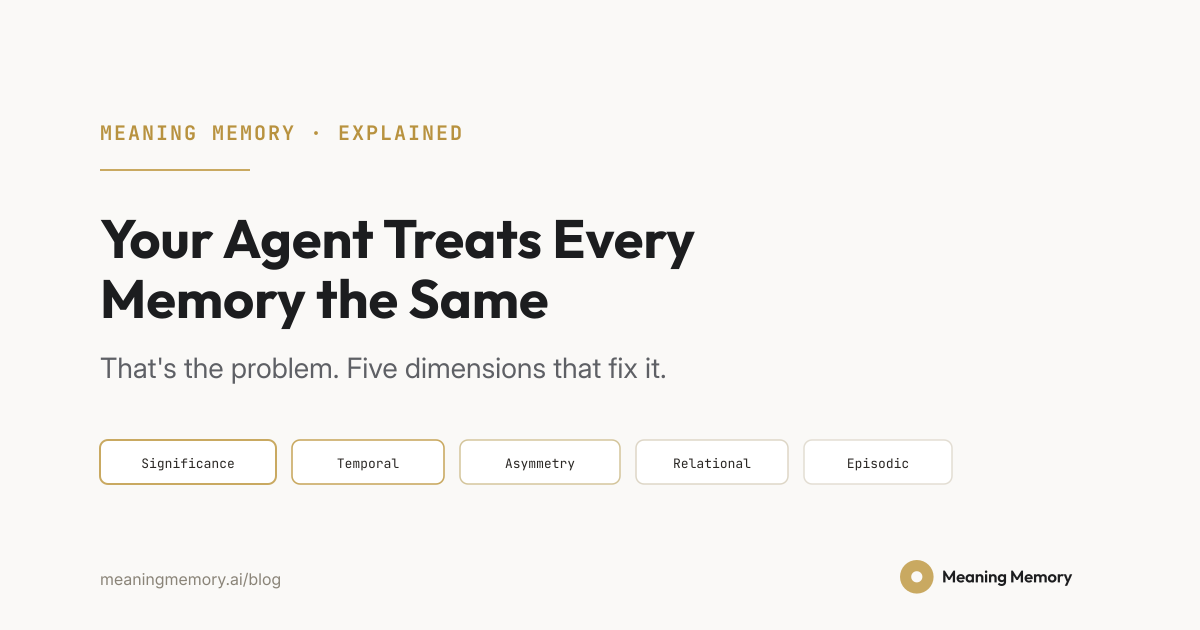
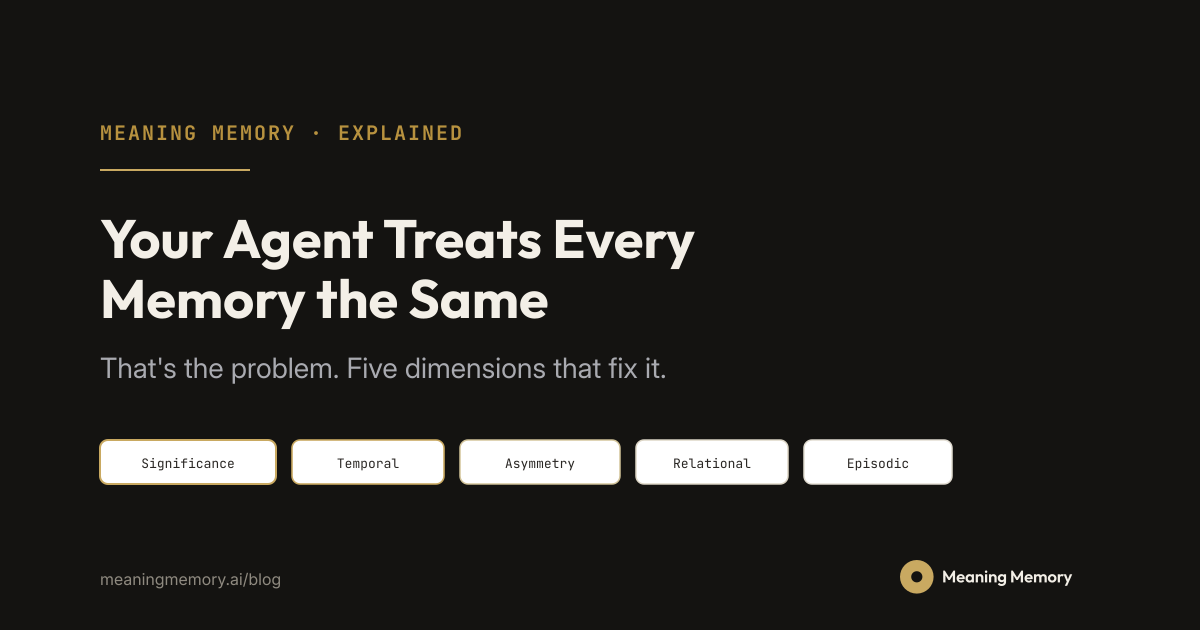
Your Agent Treats Every Memory the Same. That's the Problem.
Most agent memory systems let vector similarity decide what surfaces, which cannot tell a contract deadline from a coffee preference. This is how STARE 5D scores a memory across five dimensions, walked through two real scenarios.
-
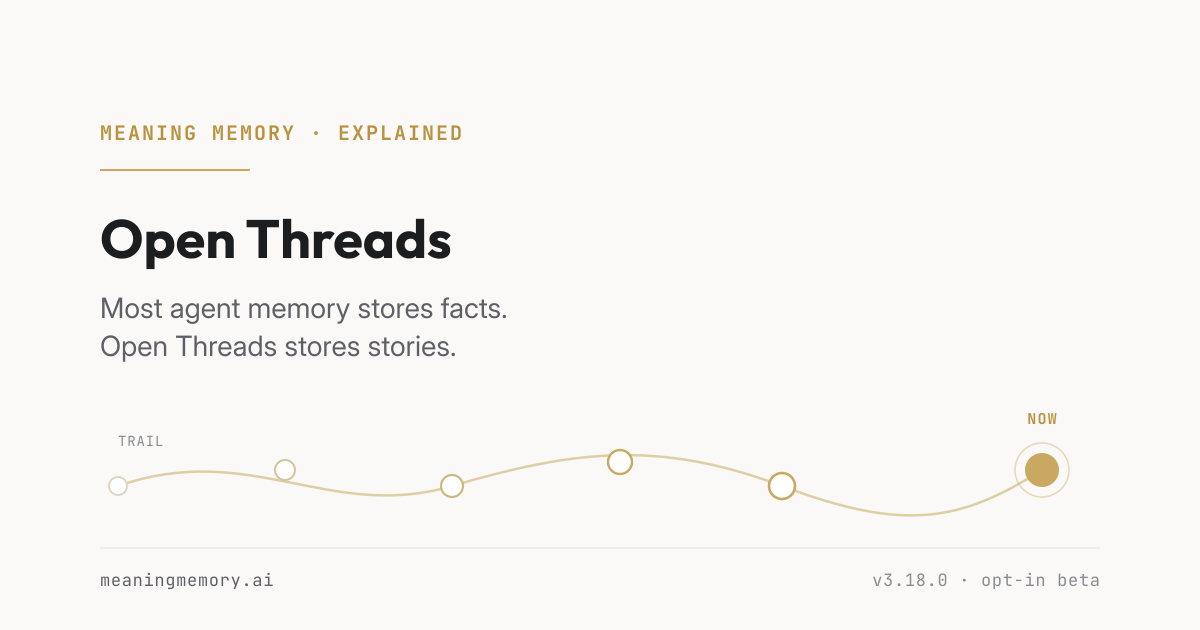
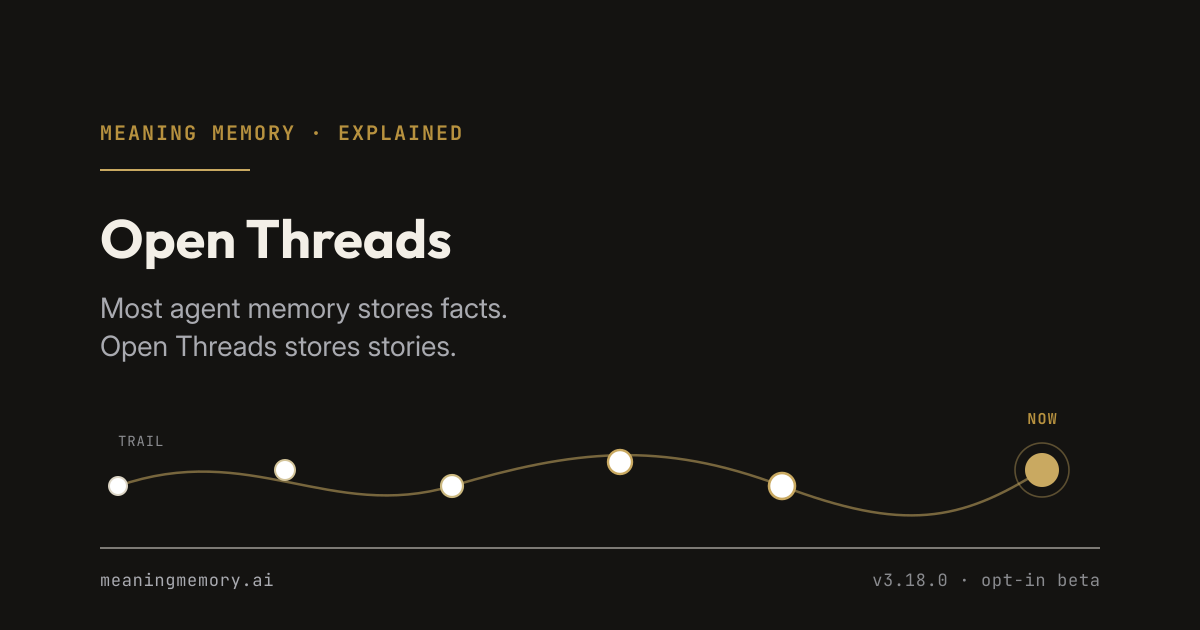
Meaning Memory Explained: Open Threads
Most agent memory stores facts. Open Threads stores stories. A plain-language explainer of episodic arc weaving: how Meaning Memory connects related events across many sessions into coherent narrative threads, and why that models human autobiographical memory better than a pile of retrieved facts.
-
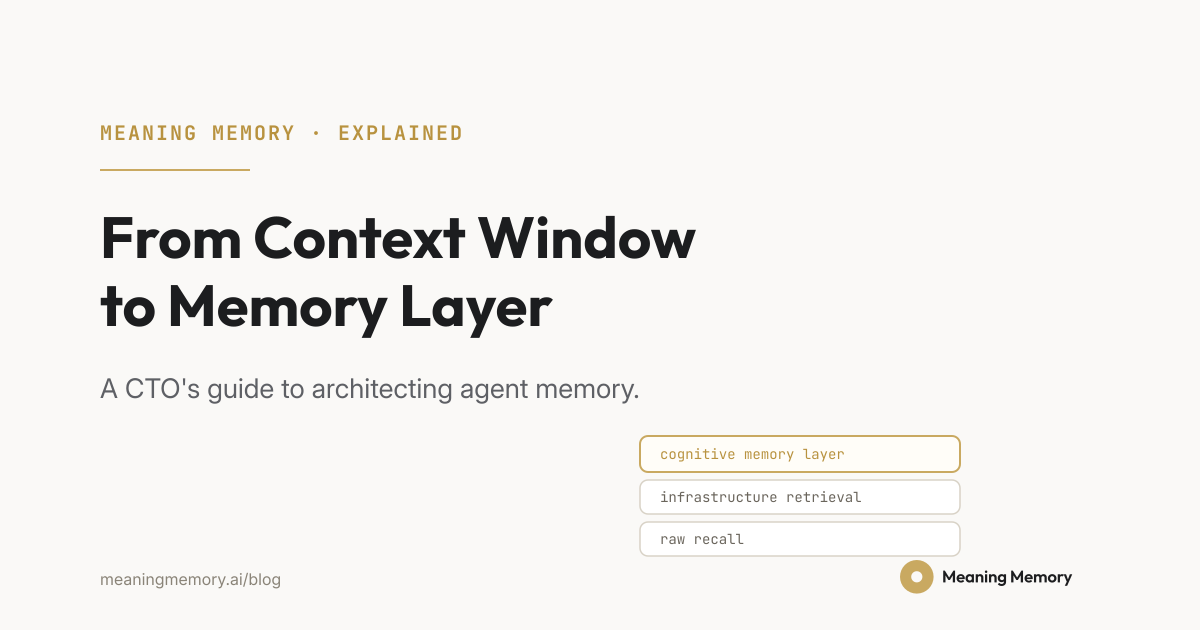
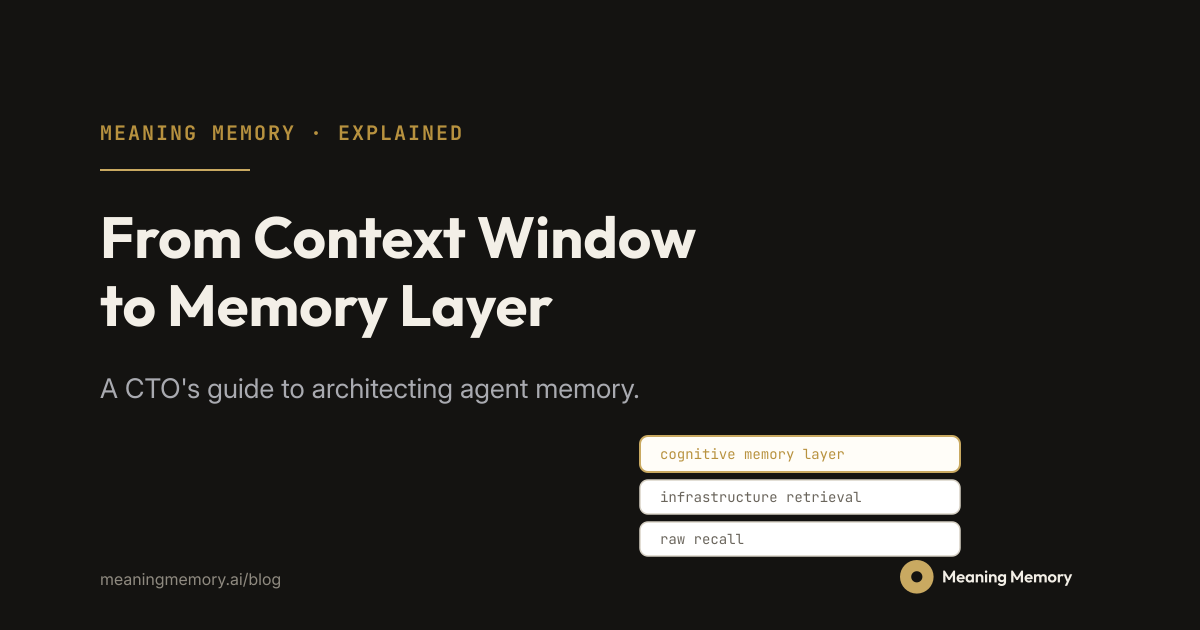
From Context Window to Memory Layer: A CTO's Guide
The context window is where every agent project starts and where most of them quietly hit a ceiling. This is a CTO-level guide to why that ceiling appears, what a memory layer actually is, and how to tell a real one from a fast cache.
-
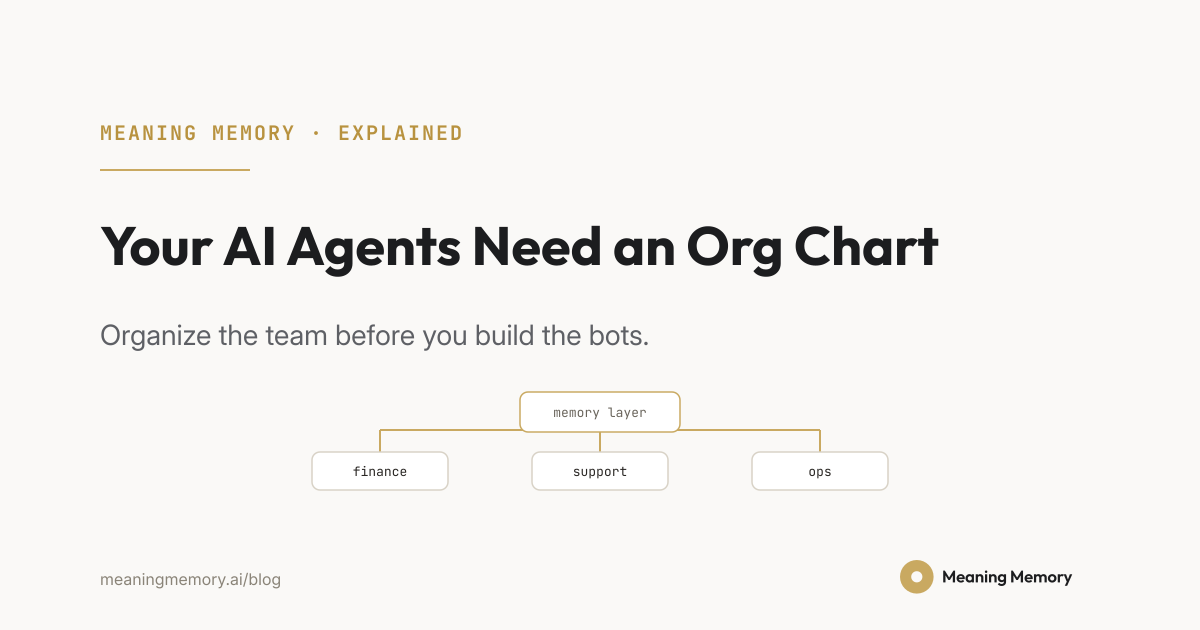
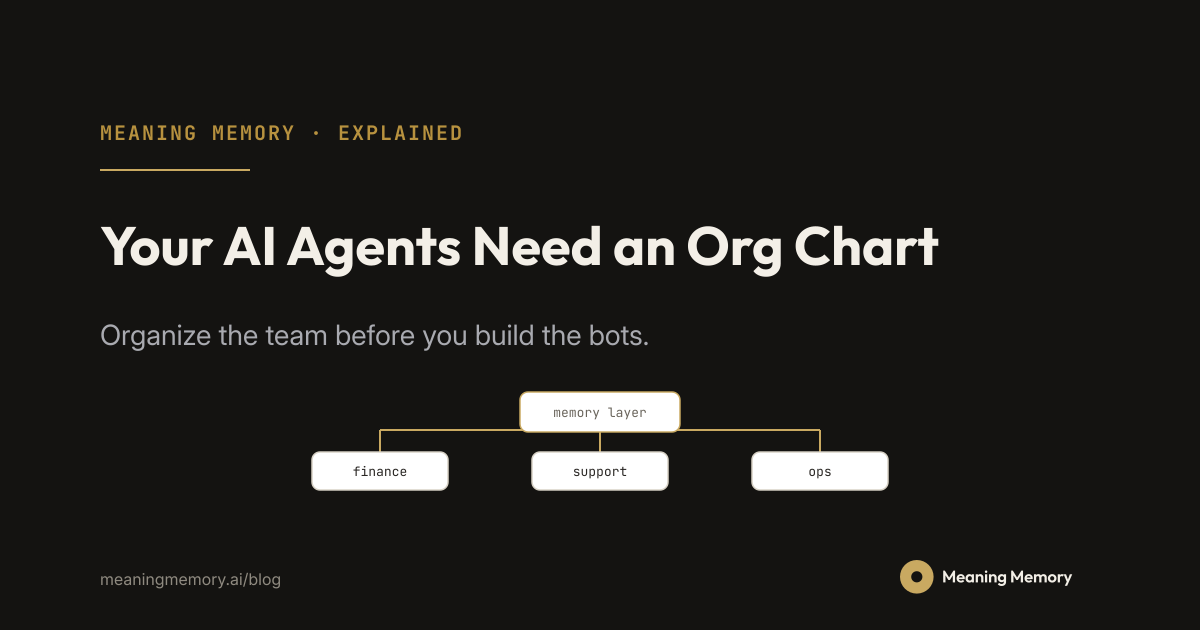
Your AI Agents Need an Org Chart, Not a Better Prompt
Deploying AI agents is an organizational decision before it is a technical one. The decisions that decide whether a fleet works, who owns what, who can see what, who is accountable for what, and how a memory layer implements each.
-
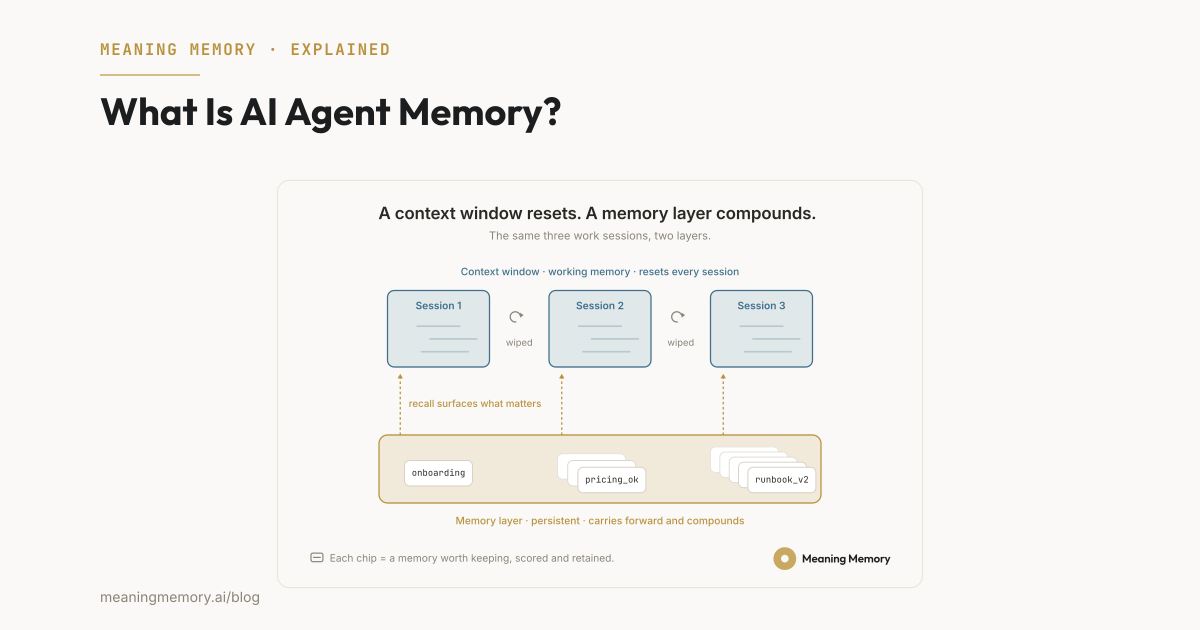
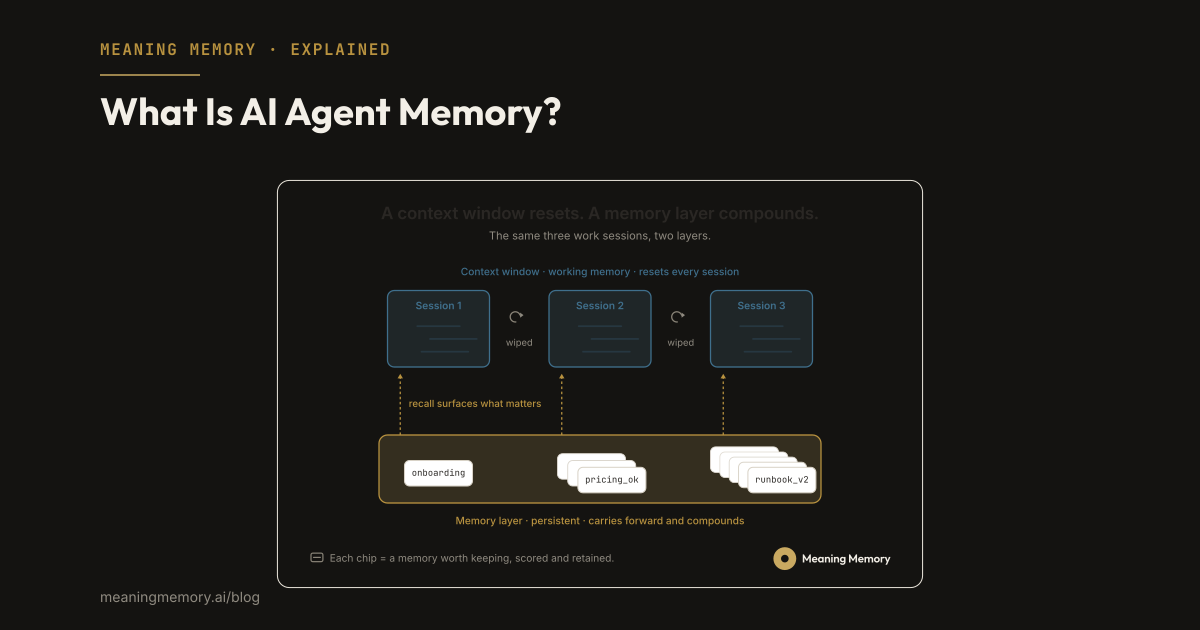
What Is AI Agent Memory?
AI agent memory is the layer that lets an autonomous agent keep what it learns, decide what matters, and recall the right thing later. Here is what that means, why a bigger context window is not the same thing, and how the current approaches differ.
-
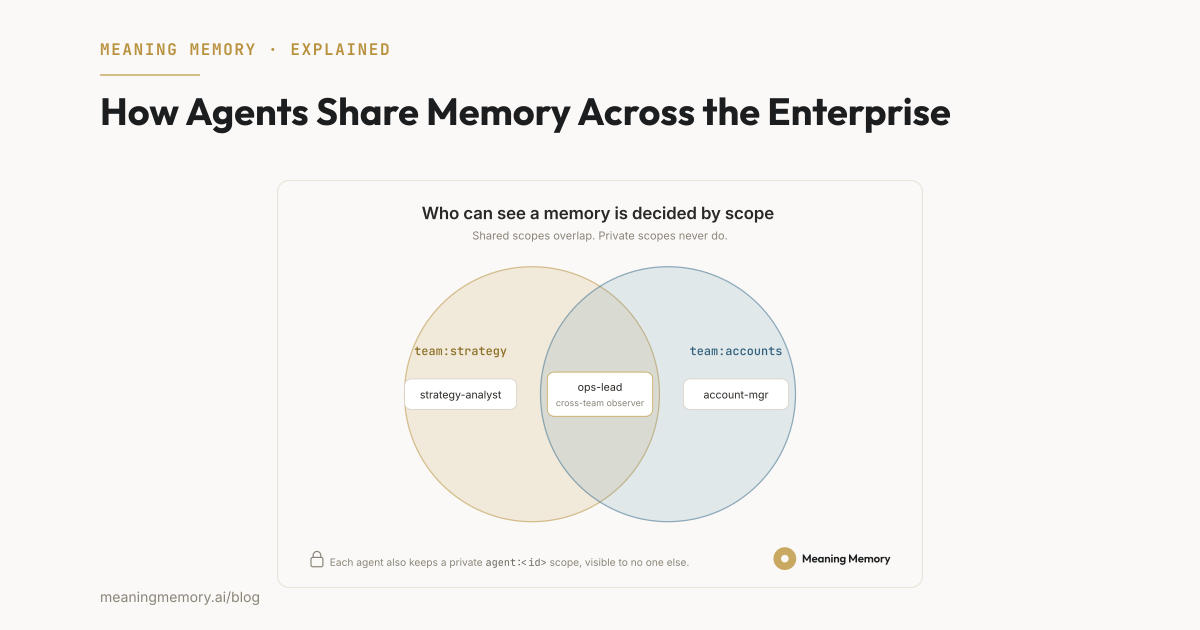
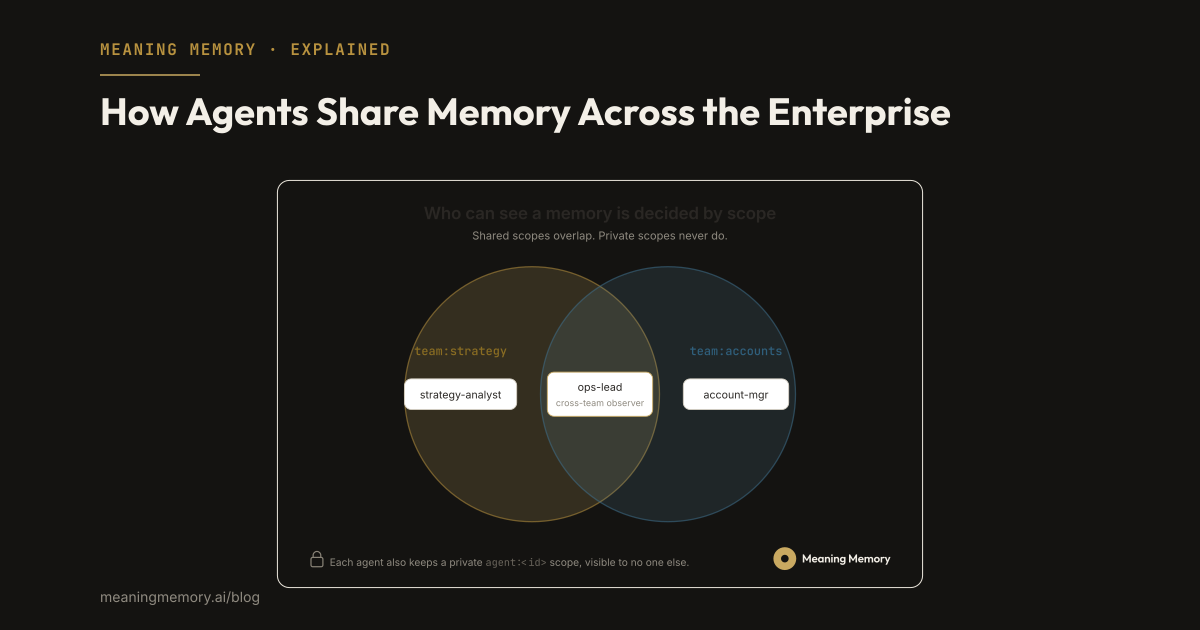
Meaning Memory Explained: How Agents Share Memory Across the Enterprise
Run more than one agent and memory becomes a boundary question. Here is how scope groups in Meaning Memory keep some memories private, share others with a team, and enforce the line in the data model, not the prompt.